|
CAUSES AND COSTS OF ACCIDENTS
A. FAULTY DRIVER PERFORMANCE
Traffic accidents
are consistently one of the top 5 causes of death in the United States. Although some accidents are unavoidable, the sad truth is that thousands of lives would be saved each
year if drivers were aware of the physical, psychological, road, and weather conditions which increase accident risk and took
defensive steps to insure safe driving.
Fatigue, physical and mental
There are a number of physical
conditions which can affect safe driving and physical abilities which are
necessary for avoiding accidents. Physical conditions which can lead to
accidents include poor vision, poor hearing, illness, and fatigue.
Physical and
mental fatigue increase the likelihood of accidents by affecting your vision, judgment, and reaction time. Falling asleep is
the primary collision factor in about 1% of fatal and injury collisions. Driving when you
are tired is just as dangerous as driving when you have been drinking alcohol. The more tired you are, the more dangerous it is.
When you are
tired, you are less alert. The body naturally wants to sleep at night. Most drivers are less alert at night, especially
after midnight. You increase your chances of being in a collision if you are
tired or fatigued because you may not see hazards early enough, or react as quickly as is necessary.
If you are tired, the only safe
cure is to get off the road and get some sleep. If you don't, you risk your life
and the lives of others. Below are some of the suggestions.
-
Don't take any drugs that may make you drowsy, even the
night before you start your trip,
-
Don't drive long hours,
-
Set a common
sense limit of 300 to 400 miles a day,
-
Try not to drive late at night,
-
Take regular rest stops, even if you are not tired,
-
Have another person
drive every hour or so,
-
Stop for coffee or a soft
drink every 100 miles or every 2 hours.
Emotional problems
Safe driving
requires concentration. If you are depressed, angry, or preoccupied with your
problems, you will not be able to focus on the task of
driving safely. Therefore, you should not drive if you are under severe tension, emotionally distressed, or
otherwise preoccupied with your emotions or thoughts.
Below are major emotional problems
contributing to accidents:
-
Depression
-
Anger
-
Preoccupation with problems
Operator error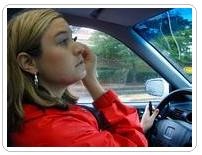
Operator error is one of the most common reason for accidents. Some of the more common
driver behaviors which lead to accidents are explained below.
-
(a) Driving too fast for the conditions
-
(b) Following too closely-tailgating
-
(c) Inattentive driving
-
(d) Poor vision and scanning habits
-
(e) Making poor decisions
-
(f) Improper lane changes
-
(g) Unsafe passing
-
(h) Failure to keep to the right
(hogging the road)
-
(i) Failing to yield the right-of-way
-
(j) Being unable to handle a vehicle in
skid situations
Drivers take unnecessary
risks while driving and make poor decisions for a number of different reasons.
Drivers who are in a hurry or who are showing off are particularly likely to
make poor driving decisions which result in an accident. Remember that accidents
as a result of making poor decisions are 100% avoidable.
Faulty pedestrian performance
One in six traffic fatalities is a pedestrian.
Pedestrians lose in any accident, regardless of who had the right-of-way.
Pedestrians have both rights
and responsibilities.
The common reasons for pedestrian involved
accidents are:
Failure to walk against traffic
When walking on the side
of the roadway, you should use the sidewalk. If there is no sidewalk, you may
walk on the roadway, but must face oncoming traffic and as far to your left as
possible. Wear bright or reflective
clothing, day and night, when walking along a roadway that does not have a
sidewalk. Don't walk or jog on any freeway where signs tell you that pedestrians
are not allowed.
Faulty automotive
equipment
A significant number of
accidents are caused by vehicle equipment failure such as:
Bad brakes are common
cause of accident. If your brakes get wet and
do not work (such as after you travel through a big puddle), dry them by lightly
pressing the gas pedal and brake pedal at the same time so that the vehicle
drives against the pressure of the brakes. Do this only until the brakes begin
working.
Bad lightning equipment
reduces you visibility of the road ahead. Scanning for hazard is more difficult
without working lightning equipment. Make sure to replace burned out light
bulbs. You might try checking
your battery terminals to see if they are loose or checking your fuses to see if
one or more is blown.
Common problem is the power steering failure caused by
leaks of power steering fluid. To help avoid accidents
caused by mechanical failure, you should keep your vehicle in good working
condition and perform routine maintenance.
Hazardous driving
conditions
Intersections
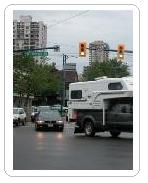
Most accidents in urban areas occur
at intersections. Because of the danger presented by intersections, it is very
important that you approach them with caution and make an extra effort to be
aware of what is happening in and around the intersection.
It is important that you scan for
potential hazards at intersections such as pedestrians, bicycles, persons
running red lights, and persons starting left-hand turns. Look for traffic
signals, signs, and potential hazards as you approach the intersection.
Accidents at intersections are most
frequently caused by drivers disobeying stop signs and red lights, or otherwise
violating the right-of-way of other drivers, such as by turning left in front of
an approaching vehicle.
It is dangerous to pass another
vehicle where someone is likely to enter or cross the road. Such places include
intersections, crossroads, railroad crossings, and shopping center entrances.
If you pass in an intersection,
your view of people, cars, motorcycles, bicycles, or trains is blocked by the
vehicle you are passing. Also, a driver turning onto the road into the left lane
won't expect to find you in his or her lane. He or she may not even look your
way.
It is dangerous, although not
explicitly illegal, to change lanes in an intersection. You could be cited for
making an unsafe lane change if, in the opinion of the law enforcement officer,
your lane change was hazardous for conditions.
Poor visibility due to fog, rain, and darkness
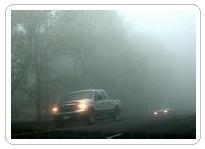
When driving in bad
weather, you should remember that the faster the speed, the less control you
have over your vehicle. Rather than just following the posted speed limit, you
should consider how the road conditions may affect the safe operation of your
vehicle. For example, if the posted speed limit is 35 MPH, you should not drive
this speed if you are traveling towards a curve on a downhill icy road. Many new
drivers do not slow to safe speeds for road conditions, which is one reason why
they have more out-of-control accidents than do experienced drivers.
Make sure that your
vehicle's windows and lights are clean and working before driving in bad
weather. Check that the windshield wipers and defroster are properly working and
that you have adequate tread on your tires.
Road variations
Curves, parked vehicles, hills
Hills and curves create
situations that are hazardous by:
-
(a) blocking your view ahead and the
view of other drivers, and
-
(b) causing vehicles to move slower or
faster than is safe.
Because you cannot tell
what is on the other side of a steep hill or sharp curve, you must be going
slowly enough to be able to stop. When approaching a curve in the road or hill
which blocks your view of the road ahead, slow down so you can stop, if
necessary. A vehicle may be stopped or a pedestrian may be crossing the roadway
that you can't see until you are around the curve or over the hill.
You must be able to see at
least one-third of a mile ahead to pass safely. Any time your view is blocked by
a hill or curve, you should assume that there is an oncoming car just out of
sight. This means you should only pass if a hill or curve ahead is more than
one-third of a mile away. You must not drive on the left side of a roadway when
coming to a curve or the top of a hill where you can't see far enough ahead to
be sure it is safe to pass.
Slick road surface
Slow down at the first sign of rain on the road. This is when
many roads are the most slippery because oil and dust have not been washed away.
If the road is slippery, it will not give your tires the grip they need. You
must drive slower than you would on a dry road.
B. ACCIDENT AVOIDANCE AND PREVENTION
Defensive driving techniques
The key to accident avoidance is to
let other drivers know what you plan to do, to avoid hazardous situations, and
to always drive defensively. If you have an accident, you may
not legally be at fault; however, you may be morally at fault, if you could have
prevented the accident but didn't. Remember you can prevent most accidents if
you drive defensively.
Be alert
Defensive driving requires
that you be alert and constantly anticipating the possibility of a dangerous
situation developing around you. It is driving to defend yourself against
possible accidents caused by bad or drunk drivers, poor weather, and heavy
traffic.
When you are tired, you are less alert. The body naturally
wants to sleep at night and most drivers are less alert at night, especially
after midnight. You may not see hazards as soon or react as quickly, so the
chance of a crash is greater. If you are sleepy, the only safe course is to get
off the road and get some sleep. If you don't, you risk your life and the lives
of others.
Don't make assumptions about other driver's intensions
The basic notion
underlying defensive driving is to not assume that other drivers are sober,
alert, and will follow the rules of the road, and to select a speed and position
for your vehicle that will allow you to escape a collision if other drivers do
not act in a safe manner.
Skid techniques (keep front tires aligned with
intended path)
Not understanding how to
handle your vehicle in emergency skids is a significant cause of accidents.
Skids occur whenever tires lose their grip on the road. Certain road and weather
conditions are particularly likely to cause your vehicle to skid. You need to
know how to handle your vehicle during skids to avoid accidents.
If you lose traction while
going around a corner, you should: (a) take your foot off the gas pedal and do
not brake, and (b) turn your front wheels in the direction of the skid
until you regain control.
If you lose traction while
going around a corner or turn in a front wheel drive vehicle, you should apply
some gas, not brake, steer in the direction you want the vehicle to travel, and
drive through it.
Two general points to
remember for recovering from skids are:
The key to avoiding skids
is to always smoothly apply your brakes and accelerator, and to turn slowly and
smoothly. You should also reduce your speed before approaching turns and when
driving in potentially hazardous conditions such as wet, icy, or snow-covered
roadways, or on roadways with loose gravel.
Three seconds rule
Good drivers keep a safe following distance so
they can see better. The more space they allow between their car and the car
ahead, the more time they will have to see a hazard or accident down the road.
They will have more time to stop, or to avoid the hazard.
Keep enough space between your car and the car ahead so that you will have "a
bigger picture" of what lies down the road and steering will be easier. You can
travel in the center of the lane instead of hugging one side or the other to let
you see.
Most rear end collisions are caused by following too closely. To avoid this, use
the "three-second rule." When the vehicle ahead of you passes a certain point,
such as a sign, count "one-thousand-one, one-thousand-two, one-thousand-three."
This takes about three seconds. If you pass the same point before you finish
counting, you are following too closely. At faster speeds the distance should be
greater.
Escape techniques
Remember that there are
three things you can do to avoid an accident in an emergency situation:
-
(a) stop,
-
(b) turn, and
-
(c) speed up.
Stopping is not always the
safest maneuver in an emergency situation. If you do not have time to
stop safely in an emergency situation, you should try turning or steering your
vehicle away from the hazard. You can try running off the roadway (but not into
oncoming traffic) if you have to and if there is room. Running off the road is
usually a better option than hitting another vehicle, particularly head-on. If
you are going to brake while you turn, make sure to not lock your wheels (if you
have don't have antilock brakes).
Although it may not seem
intuitive, sometimes you can speed up to avoid an accident. This may work if a
vehicle is going to hit you from the side or the rear. For example, if you are
crossing an uncontrolled intersection and you notice a vehicle approaching at a
high speed from the side, you should quickly speed up to avoid being hit from
the side.
Emergency braking- Pump drum brakes, use
threshold braking for disc brakes and slam on anti-lock brakes
Most drivers hit the brakes first
to avoid an accident. Sometimes this locks the wheels, unless you have antilock
brakes. This, in turn, causes the vehicle to skid, which makes things worse
because you lose control of your vehicle. Driving defensively requires that you
understand the techniques for stopping in an emergency situation and the
techniques for skid avoidance and recovery that were described earlier in this
unit.
To stop quickly in an emergency
situation use threshold braking. Apply firm, steady pressure on the brake. If
the car begins to skid, let up on the brake pedal until the wheels begin to roll
again. Then increase the pressure on the brake again, using firm, steady
pressure. Repeat this process until the vehicle stops. Remember that you should
never pump antilock brakes. Simply apply firm, steady pressure until the vehicle
stops. As long as you do not go into a skid while emergency braking you will
still be able to maneuver you car. Try to steer your vehicle away from hard
objects such as other vehicles, abutments, and trees while you are braking in an
emergency situation.
Effective use of horn
Your horn can be an
effective tool that you can use to avoid a collision with another vehicle,
pedestrian, or animal. You should sound your horn
and flash your lights when it will help to avoid an accident by alerting another
driver to your presence. For example, although you should first try to get eye
contact with other drivers, sometimes it may be necessary to tap your horn to
alert another driver who may not see you when it appears that he or she may
accidentally cut you off. It is safer to use your
brakes than to use your horn. You should never use your horn if slowing or
stopping your car will prevent an accident.
On narrow mountain roads,
drive as far to the right as possible and sound your horn when you cannot see at
least 200 feet ahead due to curves, hills, weather, or other obstacles.
You should only use your
horn to avoid an accident. Do not honk your horn:
-
(a) because someone is driving or
walking slower than you would like,
-
(b) to chastise other drivers who have
made a mistake, or
-
(c) because you are angry.
You may also legally flash
your headlights under certain circumstances to get the attention of another
driver who may not see you.
Be flexible in selecting appropriate speed for conditions
Defensive driving means that you
need to be flexible in selecting a speed which is neither too fast or nor too
slow and which is appropriate for the traffic conditions.
Speed limits are set for the type
of road and the traffic in a given area. All speed limits are based on ideal
driving conditions (e.g., good weather, no traffic, during the day, etc.).
The Basic Speed Law says that you
must never drive faster than is safe for current conditions, regardless of the
posted speed limit. However, you also may never legally drive faster than the
posted speed limit and can be cited for blocking the reasonable and normal
movement of traffic for driving too slowly.
Accidents will tend to happen when
one driver is going faster or slower than other vehicles on the road. It is best
to choose a speed that is consistent with other traffic. In other words, when
choosing a speed, you should go with the flow.
Driving too fast
High speed increases your
stopping distance. The faster you drive, the less time you have to avoid a
hazard or accident. No matter what the speed
limit sign may say, you should adjust your speed depending on:
-
(a) the number and speed of other cars
on the road,
-
(b) whether the road surface is smooth,
rough, graveled, wet, dry, wide, or narrow,
-
(c) whether there are pedestrians are
bicyclists near the roadway, and
-
(d) the amount of rain, fog, snow, ice,
wind, or dust.
Driving too slow
Going slower than other vehicles or
stopping all of a sudden can be just as dangerous as speeding. Driving slower
also tends to make other vehicles bunch up behind you and it could cause a rear
end collision. If many cars are pulling out to
pass you, maybe you should increase your speed to the speed limit or move over
into the right lane.
Avoiding a collision with the car ahead
The key to avoiding all
types of accidents is to drive defensively. However, certain defensive driving
techniques are useful for avoiding front and rear-end collisions in particular. To avoid colliding with
vehicles ahead of you, it is important to choose the correct lane in terms of
your intended path and traffic conditions, and not do so at the last moment. To avoid colliding with
vehicles ahead of you, you should increase the cushion of space in front of your
vehicle (following distance) to at least 3 seconds.
Sometimes you will need more than a "three-second" cushion. Give yourself a
"four-second or more" cushion:
-
(a) you are being tailgated,
-
(b) your vision is blocked,
-
(c) visibility is poor,
-
(d) when you increase your speed, and
-
(e) when adverse roadway, traffic, or
weather conditions exist.
Avoid momentary
distractions- pick a safe time to look away. Minimize the danger of being
distracted from the roadway by:
-
(a) not allowing distracting conditions
to exist inside the car,
-
(b) taking only short looks away from
the roadway, and
-
(c) having a passenger read maps and do
other non-driving tasks.
Look ahead for trouble by:
-
(a) looking over and around the vehicle
ahead,
-
(b) lowering your speed when approaching
hilltops or curves,
-
(c) being aware of brake lights in
adjacent lanes and ahead in your lane, and
-
(d) starting to decelerate early and
smoothly to warn other drivers behind you.
To avoid colliding with
vehicles ahead of you, you should be especially careful while driving:
-
(a) near controlled intersections,
-
(b) near crosswalks,
-
(c) in lanes which travel next to parked
cars,
-
(d) at parking lot entrances,
-
(e) near freeway interchanges where cars
enter and exit,
-
(f) on slippery or ice covered streets,
and
-
(g) near where children are playing.
Avoid being rear ended by
another driver
The most frequent causes
of rear-end accidents are not paying attention while driving, excessive speed,
and tailgating.
To avoid being rear ended
by another driver:
-
(a) increase to a 3 or more second
following distance from vehicles ahead,
-
(b) signal early for turns, stops, and
lane changes,
-
(c) brake smoothly and gradually--do not
stop abruptly or slam on your brakes,
-
(d) keep pace with traffic when possible
and legal,
-
(e) frequently check your rear-view
mirrors to see if you are being tailgated and take appropriate action if you
are,
-
(f) check over your shoulder to insure
you have space before changing lanes,
-
(g) keep your brake pedal depressed even
after stopping, and
-
(h) keep rear lights clean and
functioning.
When you follow too
closely and another driver cuts in front of you, the normal reaction is to slam
on your brakes or swerve into another lane. Both of these maneuvers are
dangerous in traffic. Swerving out of the way most often results in cutting
someone else off. It might also result in the vehicle behind you crashing into
you or other vehicles around you. Slamming on your brakes can result in a
locked-wheel skid, which is always dangerous. Make sure to keep a large enough
space cushion in front of your vehicle so that you will be able to stop quickly
in an emergency situation without slamming on your brakes.
If another driver cuts in
front of you, it is better to just take your foot off of the gas. This will give
you space between your car and the other vehicle without swerving into another
lane or risking a skid. Don't overreact if you are cut off. Plan your emergency
escape route before an emergency happens. This will help you to avoid being
rear-ended.
How to choice an
alternative path of travel as an escape route
Keeping an "escape route"
is when you position your vehicle so that you have an alternative path of travel
to avoid a collision should conditions change rapidly. Defensive drivers always
leave themselves an "out" or escape route in case of an emergency.
Escape routes are nothing
more than possible alternate paths of travel. As you drive, identify an
immediate path of travel. This is where you want your car to be 4 to 5 seconds
from now, based on existing road and traffic conditions.
You also need to identify
an alternative path of travel where you would place your car if your immediate
path of travel were suddenly blocked. This 4-to 5-second gap, like a 3-second
following distance, is determined by counting. Simply pick a point ahead and
count "one-thousand one, one-thousand two, one thousand three, one-thousand
four, one-thousand five."
Importance of maintaining adequate visual lead
If you look ahead, and keep your eyes moving, you will spot a
hazard more easily. Once you have seen the hazard and decided what to do, act.
Never "wait and see." Never think that everything will be all right. Children
playing in the street may not see you. The boy on the bike may ride in front of
you.
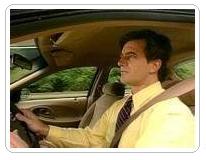
In order to avoid last minute moves, you should look down the
road 10 to 15 seconds ahead of your vehicle. A driver needs to look that far
ahead to see hazards early. Constantly staring at the road just in front of your
car is dangerous.
If you look ahead, you will be able to see important things
that you can't see later on, such as someone getting into a parked car.
In the city, 10 to 15 seconds is about one block. When you
drive in city traffic, you should look at least one block ahead. On the highway,
10 to 15 seconds is about a quarter of mile.
Take in the Whole Scene: Looking 10 to 15 seconds ahead
does not mean looking only at the middle of the road. It means looking at the
side of the road as well. "Scanning" the roadside helps you to see:
- Cars and people that may be in the road by the time you
reach them.
- Signs warning of problems ahead.
- Signs giving you directions.
Keep your eyes moving. Look near and far. Turn your head
before changing lanes, because mirrors have blind spots. These blind spots can
hide a motorcycle or bicycle. Watch for things about to happen like a ball
rolling into the street; a car door opening; a swerving bicycle.
Watch for Hazards: Look beyond the car ahead of you.
Don't develop a "fixed stare." Look around. Keep your eyes moving. Check your
rearview mirrors frequently (every 2 to 5 seconds) so that you know the position
of vehicles near you.
On the freeway, be ready for changes in traffic conditions.
Watch for signals from other drivers. Expect merging vehicles at on ramps and
interchanges. Be prepared for rapid changes in road conditions and traffic flow.
As you look ahead, think about what will (or might) happen on
the road. Be alert for vehicles on either side, to the front, and to the rear.
Use your mirrors. Leave enough space between you and the vehicle ahead for safe
stops. Always leave yourself an "out." Mistakes cause collisions. To protect
yourself, know which lanes are clear so you can use them if you need to.
Select speeds which position your vehicle between
clusters of vehicles
To insure that you have an
escape route when driving in traffic, select a speed which places your vehicle
between rather than inside clusters of other vehicles.
Select a safe lane position within traffic
clusters
If you are in a cluster of
vehicles, maintain a cushion of space around your entire vehicle. Remember that
the purpose of this space is to give you additional time to see and react to
potential hazards.
Avoid multiple hazards
It is also necessary to simplify
some situations when you are faced with several potential hazards at the same
time. The driver’s task in such situations is to avoid having to cope with too
many hazards at the same time.
For example, while driving on a
narrow, two-lane road, you might identify a pedestrian walking on your side of
the road and a truck approaching in the oncoming lane. By adjusting your speed,
you can avoid meeting the oncoming truck and passing the pedestrian at the same
time. This simplifies the situation by separating one potential hazard from the
other and allowing you to take them on one at a time. Slow down and let the
truck pass. Then, move to the left to allow plenty of room before you pass the
pedestrian.
Avoid encountering a
situation that involves multiple hazards by
-
(a) identifying hazards early,
-
(b) predicting potential hazards,
-
(c) adjusting your speed and position ,
and
-
(d) anticipating and planning escape
routes.
C. PROCEDURES WHEN INVOLVED IN AN ACCIDENT
Accidents, stopping
requirements
You must try to remain calm when
you are involved in an accident. Do not argue or fight with other persons
involved or with emergency personnel. Other persons may be in shock or pain.
If you are involved in an accident,
you are legally required to stop your vehicle and give assistance. Someone could
be injured or need your help. You are also required to stay at the scene and
provide information to other persons involved and to law enforcement, if
applicable.
Not stopping if you are involved in
an accident where there are injuries to others or property damage is called "hit
and run" driving. This can result in 1 year of jail time and a fine of up to
$10,000. If you fail you stop at an accident that results in death or permanent,
serious injury, it can result in imprisonment for up to 4 years and a $10,000
fine. Subsequent hit-and-run convictions result in a mandatory 5-year prison
term.
Victims at the scene
Check to see if you, your
passengers, and other persons involved in the accident are injured. If you think
you might be injured, you should seek medical attention. Some injuries do not
become apparent until after the shock of the accident wears off.
Property damage-unable to locate owner
If you damage someone's
property, such as when your vehicle rolls into a parked car or you hit a tree or
sign post, you are required to:
-
(a) try to find owner or driver,
-
(b) leave a note with your name and
address and that of the owner of the car you are driving in a conspicuous
place, and
-
(c) report the accident to law
enforcement.
Aid to the injured person
You are required by law to
render reasonable assistance to any person injured in an accident in which you
are involved. This includes transporting, or making arrangements for
transporting, any injured person to a physician, surgeon, or hospital for
medical or surgical treatment if it is apparent that treatment is necessary or
if transportation is requested by any injured person.
Sending for help
You should see that help
is called if a person is injured-- call the police or CHP using 911.
When to move an injured person
While first-aide for
bleeding and shock is appropriate, moving an injured person may cause
additional, more severe injuries. Only move an injured person when not doing so
puts them in a life threatening situation, such as being burned in a fire, being
hit by another vehicle, or drowning.
Preventing further
damage
If you are stopped on the roadway,
turn on your emergency flashers. You should use flares or reflective triangles
to warn other drivers, if you have them.
To reduce the chances of a fire,
turn off your ignition. If fuel is leaking from your vehicle, stay back-- it may
catch on fire.
If you are involved in an accident
resulting in only property damage (including vehicles), if possible, you should
move your vehicle off the main lanes of the roadway to a safe location within
the immediate vicinity of the accident unless it would cause an injury to any
person.
If the damage to your vehicle makes it undrivable, you should
have it moved off the roadway. In most cases, damaged vehicles will be towed if
they are left on the side of the road for an extended period of time. This can
be more expensive because you will probably have to pay storage fees in addition
to regular towing fees. It is best to take care of having your vehicle towed
while you are at the accident scene.
R eporting
requirements
If you are involved in an accident
in which someone is killed or injured (no matter how slightly) or if there is
more than $750 in property damage, you must report the accident to DMV within 10
days on a Traffic Accident Report form SR 1, which is available from any DMV or
CHP office.
An accident report can be filed for
you with DMV by your insurance company, but you are held responsible if they
fail to do so. You are better off filing the report yourself than risking the
penalty of not reporting the accident to DMV.
The accident report required of you
is not filed by the police or CHP even though a police report may be prepared at
the scene. Law enforcement officers, if they come to the scene of an accident,
will probably file a law enforcement report, not the accident report that is
required of you by law to be filed with the DMV.
A report is required by each driver
involved in the accident, regardless of who caused it, and even if it occurred
on private property.
If you are involved in an accident
in which someone is killed or injured, you must also report the accident to the
police or CHP within 24 hours. This is in addition to the report required to be
filed with DMV.
If you are unable to report an
accident due to injury, your passengers (if any) are required to file the report
and provide information to law enforcement and other persons involved in the
accident.
Your license will be suspended for
failing, refusing, or neglecting to report an accident in which there is more
than $750 worth of property damage, an injury, or death.
You are required to provide
accurate information to law enforcement.
Exchange information
If you are involved in an
accident you must provide to other persons involved (and the police, if
applicable):
-
(a) your driver license number,
-
(b) your vehicle registration card,
-
(c) evidence of financial responsibility
including the name and address of your insurance company and policy number,
and
-
(d) your correct address.
If someone is injured or
killed, passengers must also show identification to other persons involved and
to law enforcement.
If there are witnesses to
the accident, you should obtain their names, addresses, and phone numbers. You
should also record damage to your vehicle and injuries. It is a good idea to
keep a camera in your vehicle for recording damage to all vehicles involved.
If you damage someone's
property, you are required to present the same information (driver license,
financial responsibility, etc.) as in any other accident.
Failure to provide the
required information at the scene of an accident or leave a note with the
required information is a misdemeanor and may result in 6 months in jail and a
$1,000 fine.
Your license will be
revoked for failing to stop at the scene of, or to provide information for, an
accident resulting in injury or death to any person.
Your license will be
suspended for being unable to show proof of financial responsibility when
involved in an accident.
Accidents with animals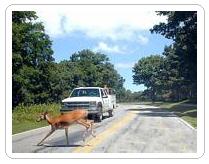
If you accidentally kill
or injure an animal:
If you cannot locate the
owner, call the humane society or law enforcement. You should never just leave
an injured animal to die, nor should you try to move or otherwise touch an
injured animal.
D. FINANCIAL RESPONSIBILITY REQUIREMENTS
When a report is required
Some automobile accidents must be reported to the DMV:
-
if someone is killed
or injured, report accident within 24 hours
-
if there is more than
$750 in property damage, report the accident within 10 days
Purpose
of insurance
The purpose of insurance
is to insure that you will be able to pay (financially responsible) for injuries
and damages if you are involved in an accident. Compulsory
financial responsibility law which requires that every driver and every owner of
a motor vehicle maintain financial responsibility at all times.
You must carry written
evidence of insurance or other financial responsibility for your vehicle
whenever you drive. There are minimum amounts of insurance that you must have.
You must present your evidence of financial responsibility to other persons with
whom your are involved in an accident and at the request of law enforcement.
Additional forms of coverage
There are at least four
different types of insurance:
-
(a) collision,
-
(b) comprehensive,
-
(c) liability, and
-
(d) uninsured motorist.
You should understand the
differences between them for when it is time for you to purchase insurance for
your own vehicle.
Collision insurance deals
with damage to your vehicle in the event of a collision. This type of insurance
is normally subject to a deductible, meaning that you have to pay a certain
amount for damage to your vehicle before your insurance company will pay.
Collision insurance policies are limited by various terms indicated in the
policy.
Comprehensive insurance
deals with theft of your vehicle or damage to your vehicle caused by factors
other than a collision such as a rock hitting your windshield. Comprehensive
policies are also normally subject to a deductible, and are limited by various
terms in the policy.
Liability insurance
addresses your responsibility to others for injury, death, and property damage.
This is the type of insurance that you are required to have by law. Liability
policies are also limited by terms in the policy.
Uninsured motorist
insurance addresses medical expenses that you or your passengers may incur when
in an accident that is not your fault and is caused by another driver who does
not have insurance.
Dangers of being
underinsured
If you do not have enough insurance
(i.e., you are underinsured) and are involved in an accident, other persons
involved could bring a judgment against your assets. In other words, they can
sue you for damages not covered by your insurance policy.
As the owner of a vehicle, you are
responsible for damages in the event of an accident in which someone else is
driving if they have your express or implied permission to drive the vehicle.
The person signing a minor's license application assumes liability for damages
caused by the minor regardless of whose vehicle he or she is driving.
Suspension for
failure to provide proof of coverage
Your license can be suspended for
failing to have or provide proof of insurance. It is illegal to drive without
being financially responsible.
If you don't have evidence of
financial responsibility to show law enforcement when you are stopped for a
citation or after an accident, you may have to pay a fine and your vehicle may be impounded.
If you do not have acceptable financial responsibility and you have an accident,
you may lose your license.
Presenting false evidence of
financial responsibility, including an expired or canceled insurance policy,
bond, certificate of self insurance, or assignment of deposit letter is a
misdemeanor punishable by a fine and jail time.
The evidence of financial
responsibility that you present to DMV to register your vehicle or in the event
of an accident or other traffic stop is reviewed. DMV may ask the insurance
company or other entity to verify that you do indeed have coverage, particularly
at the time of an accident. If you did not actually have the proper insurance
coverage, your driving privilege will be suspended for 1 year. To get your
license back, you will need to provide evidence of financial responsibility and
maintain it for the next 3 years.
Accidents
and minors
If you are under 18 years of age,
your parents must sign your license application. Your parents, or any other
persons who sign for your driver license, accept liability for any
one accident that you are involved in.
This assumption of your liability
may be voided when the person who signed for your license notifies DMV to have
your license canceled. Your parent's or guardian's liability also ceases when
you reach age 18.
If you are involved in an accident,
you may be liable for civil damages. If the accident involved a law violation,
then you may also be fined.
Your parents are responsible if you
are under 18 and drive without a license. You may not even drive mini bikes,
scooters, or mopeds on public property (roads or sidewalks) without a driver
license.
Proof required when
registering a vehicle or renewing
A vehicle cannot be
registered or have its registration renewed without evidence of financial
responsibility. DMV will ask you to provide proof of insurance or other form of
financial responsibility each time when your registration comes up for renewal
(every year.)
|
 Content
Of Online Course
Content
Of Online Course